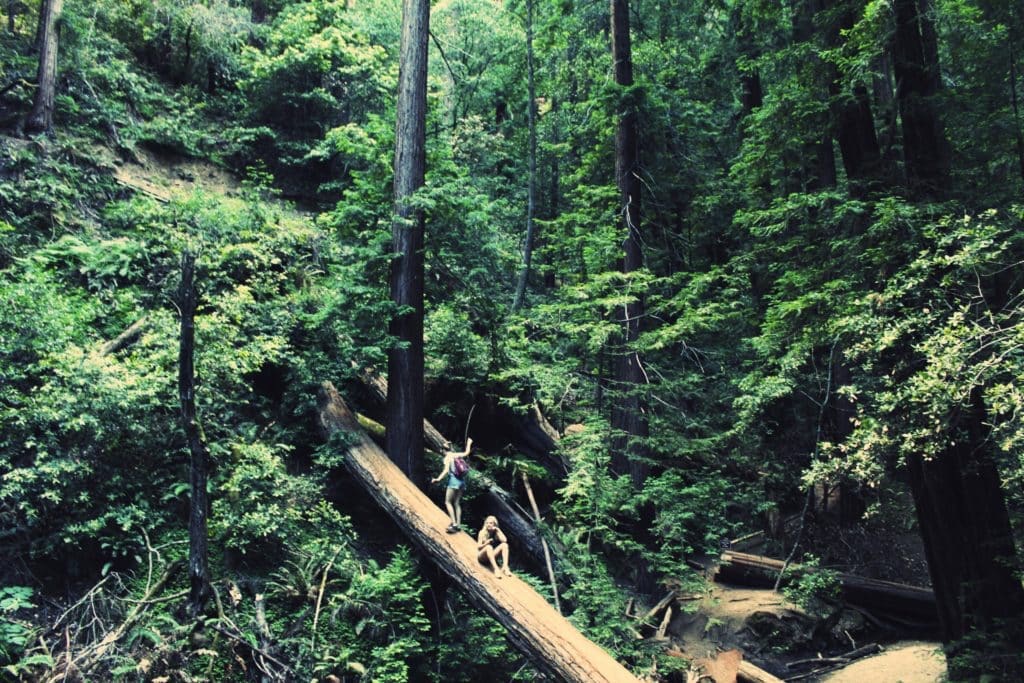
Muir Woods in Winter
The park most visitors avoid is often the park at its best. Winter brings the year’s smallest crowds, the coho salmon run, storm-green moss, and occasional closures that lock Muir Woods Road for 48 hours at a time.
Weather
Winter is the wet season. Expect rain on 30 to 50 percent of winter days, usually in storm bands that last 24 to 48 hours. Between storms, skies clear to crisp, high-visibility blue.
Typical park temperatures: 45 to 60°F daytime, 38 to 48°F overnight. The redwood canopy buffers everything — the coldest recorded temperature at Muir Woods is in the mid-20s, but most winter mornings are in the low 40s.
Snow at Muir Woods is almost unheard of — two or three dustings per decade. Frost is common in January on low-lying plants.
Storm Closures
This is the one hazard worth knowing about. Muir Woods Road is narrow, built along a creek, and prone to slides during heavy rain. The park and the road both close during and after major storms, typically:
- During active heavy rain — park may close mid-day
- 24 to 48 hours after a storm — slide cleanup and tree removal
- Multi-day closures — very rare but possible after a big storm cycle
Always check the NPS Muir Woods alerts page the morning of your visit. If a big storm is in the forecast for your planned day, have a backup plan.
The Coho Salmon Run
Redwood Creek hosts one of the few viable coho salmon populations south of the Russian River. Salmon return from the Pacific in late fall and winter to spawn in the creek where they were born. Peak spawning activity runs from mid-December through late January.
Where to look: the creek visible from Bridge 2 and Bridge 3 on the main trail is the most reliable spot. Watch the deeper pools on the upstream side of each bridge. Silver fish 2 to 3 feet long, sometimes swimming, sometimes holding in the current.
The run is small (dozens of fish, not thousands) and completely weather-dependent — salmon need high water from recent storms to enter the creek. The best viewing days are 2 to 5 days after a major rain event.
Mushrooms
Winter is the peak mushroom season at Muir Woods. Coast redwood forests host hundreds of fungal species, and after the first significant rains (usually November) they fruit in waves through March.
What to look for along trail edges:
- Candy cap (Lactarius rubidus) — reddish-orange, maple-syrup smell
- Bleeding tooth (Hydnellum peckii) — pale with red droplets
- Fly agaric (Amanita muscaria) — bright red with white spots, the storybook toadstool
- Turkey tail (Trametes versicolor) — banded, wavy, growing on downed redwood
Do not pick: Muir Woods is a national monument and collecting of any kind — including fungi — is prohibited. Photograph freely.
Crowds
The quietest season of the year. Weekday visits in January can feel nearly solo — you may walk Cathedral Grove and see fewer than a dozen other people. Weekends stay busier but are still far below summer levels.
Parking reservations are easy to get: typically available same-day or 1 day in advance. The exception is the week between Christmas and New Year’s, when Bay Area families with visiting relatives push weekday numbers up.
Shuttle Service
The Marin Transit Route 66F Muir Woods Shuttle does not run in winter. The service is May through October only. For winter visits, you need either a parking reservation or a guided tour.
What to Pack
- Waterproof shoes or boots — the main trail stays paved and drained, but any off-boardwalk hiking means mud
- Rain jacket — essential, even on a forecast-clear day
- Warm layer — the canyon stays cold all day in shaded spots
- Wool socks — more comfort on cold mornings
- Camera with rain protection — winter light is soft and redwood-flattering
- Thermos with hot drink — there is a cafe at the visitor center but sometimes you want something on the trail
The Case for a Winter Visit
Three reasons winter is arguably the best time to visit Muir Woods:
- The forest is at its greenest. Rain and cool temperatures push the sword ferns and mosses into peak chlorophyll. The understory looks like a Tolkien illustration.
- You can hear the forest. Winter crowds are low enough that you actually hear Redwood Creek, Pacific wrens, and wind in the canopy — things impossible to hear on a summer Saturday.
- The salmon. A 3-foot silver fish holding in a pool of cold clear water under a 1,000-year-old redwood is as Muir-Woods as Muir Woods gets. You will not see this any other season.